Most football fields don’t fail all at once. Instead, performance issues show up gradually in the form of uneven areas, standing water, and worn spots that don’t recover the way they should. By the time those problems become noticeable, they’re usually the result of decisions that were made much earlier in the process.
Subgrade Preparation
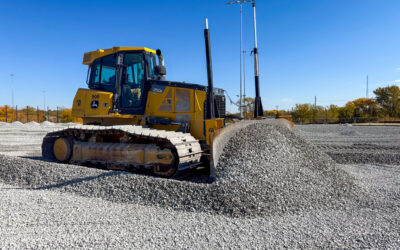
One of the most common underlying issues is how the field was built beneath the surface. Fields that begin to show inconsistent footing or subtle elevation changes often trace back to problems with subgrade preparation or base construction. If that layer wasn’t properly compacted or uniform from the start, the surface above it has no choice but to follow those inconsistencies over time. These aren’t issues that can be corrected with surface-level fixes; they’re built into the structure of the field.
Proper Drainage
Drainage is another factor that tends to separate fields that hold up from those that don’t. It’s not just about whether water leaves the surface; it’s about how it moves through the entire system. When drainage isn’t properly designed, water collects beneath the surface, softening the base, and creating conditions that lead to premature wear. In the Midwest, this becomes even more pronounced. Fields go through repeated cycles of saturation, freezing, and thawing, and any weakness in drainage is quickly exposed. What might seem like a minor issue after a rain event can turn into long-term structural stress.
Facility Usage and Surface Type
Usage is another area where fields often underperform, not because they were built incorrectly, but because they weren’t built for how they’re actually used. Many school fields end up supporting far more activity than originally anticipated. Practices, games, PE classes, and community use all add up. When a field is designed for limited use but ends up being used daily, wear patterns develop quickly, especially in high-traffic areas. Over time, those areas don’t just look worn; they begin to affect how the field plays.
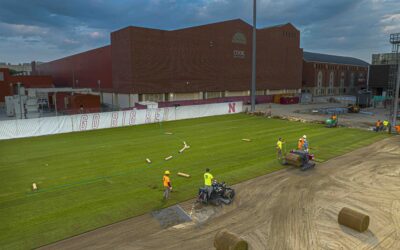
Surface type also plays a role, but not always in the way people expect. It’s easy to think of this as a simple turf-versus-grass decision, but performance over time is more closely tied to how that surface interacts with the layers beneath it. Grass fields may struggle to recover under heavy use, especially during wet Midwest seasons, while synthetic systems can show performance issues if the base or drainage isn’t functioning properly. In both cases, the surface is often responding to deeper conditions rather than causing the problem itself.
Routine Maintenance Practices
Maintenance is where small issues either get managed early or are allowed to grow into larger problems. Fields that receive consistent attention tend to hold up better, even under heavy use. On the other hand, when maintenance is delayed, whether due to time, budget, or resources, minor wear can spread quickly. In Midwest climates, where conditions can change rapidly from one season to the next, staying ahead of maintenance is often the difference between preserving performance and chasing problems.
Don’t Wait to Act
What’s important to understand is that most performance issues don’t come from a single failure. They come from a combination of factors working together over time—slight drainage inefficiencies, heavier-than-expected use, and minor inconsistencies in the base. Individually, these may not seem significant. Together, they begin to impact how the field feels, drains, and performs.
When a field starts showing signs like standing water, uneven footing, or loss of traction, it’s rarely just a surface issue. Those symptoms are usually indicators of something deeper. Taking the time to properly evaluate those conditions is the only way to understand what’s actually causing the problem and what it will take to correct it.
If your field isn’t performing the way it used to, or you’re starting to notice changes in how it handles use and weather, it’s worth taking a closer look. Our team works with schools to evaluate existing fields, identify the root causes of performance issues, and provide clear direction on what steps make sense for you. The earlier those issues are understood, the more options there are to address them effectively. Contact us today to get started.