Families today have more educational choices than ever before. Traditional public schools, private schools, charter schools, online learning programs, and homeschooling options all compete for students’ attention. As a result, school districts are continuously evaluating how they can attract and retain students while providing the best possible educational experience.
While academics remain the foundation of any successful school district, families often evaluate much more than classroom performance. Extracurricular opportunities, school culture, community involvement, and the overall student experience all contribute to enrollment decisions. Athletic facilities play a unique role in that equation because they are among the most visible and frequently used assets within a district.
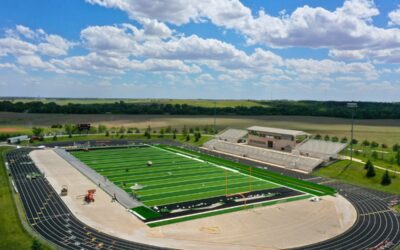
Whether it’s a football field, track complex, baseball diamond, softball field, or multi-purpose athletic space, these facilities can shape perceptions, foster student engagement, and reinforce confidence in a district’s long-term vision.
Facilities Help Shape First Impressions
There are countless opportunities for prospective families to interact with a school before deciding to enroll. Campus visits, open houses, youth sports events, concerts, tournaments, and community activities all provide opportunities to experience a district firsthand.
During these interactions, athletic facilities often serve as some of the most visible assets on campus.
Well-maintained facilities communicate pride, stewardship, and attention to detail. They demonstrate that a district values the spaces where students learn, compete, and gather. While facilities alone rarely determine enrollment decisions, they can reinforce a positive perception and contribute to a family’s overall confidence in the district.
First impressions matter, and athletic facilities often play a larger role in shaping them than many people realize.
Athletic Facilities Support Student Engagement
The impact of athletic facilities extends far beyond athletics themselves.
While student-athletes certainly benefit from quality facilities, these spaces frequently serve a much broader purpose. Athletic complexes often host marching bands, dance teams, physical education classes, after-school activities, youth camps, community events, and various extracurricular programs.
These opportunities allow students to build relationships, develop leadership skills, and cultivate a stronger connection to their school community.
Students who feel connected and engaged are more likely to have positive educational experiences. Facilities that support a wide range of activities help create those opportunities, providing spaces where students can learn, grow, and develop a sense of belonging.
Ultimately, athletic facilities are not just places to compete. They are places where memories are made, friendships are formed, and school spirit comes to life.
Well-Maintained Facilities Reflect a District’s Commitment to Students
There is a common misconception that districts need the newest, largest, or most expensive facilities to make an impact.
In reality, families often notice something much more important: how well facilities are cared for.
A district that prioritizes safety, accessibility, functionality, and long-term maintenance demonstrates a commitment to providing quality experiences for its students. Clean, functional, and properly maintained facilities convey a message that the district values its programs and plans for the future.
The facilities that make the greatest impression are not always the flashiest. More often, they are the ones that continue serving students effectively year after year because they were thoughtfully planned, properly built, and consistently maintained.
Recruitment Extends Beyond Students
Student recruitment is only one piece of the equation.
School districts also compete to attract and retain talented teachers, coaches, administrators, and staff members. When candidates visit a district, they evaluate much more than employment opportunities. They assess school culture, community support, available resources, and the overall environment in which they would work.
Athletic facilities contribute to that evaluation process.
Well-maintained facilities can signal community pride, organizational commitment, and a willingness to invest in programs that support students. They help reinforce the perceptionthat a district values both its people and its future.
Similarly, community partners, donors, and local organizations often view facilities as reflections of a district’s priorities and long-term planning efforts.
Athletic Facilities Strengthen Community Connection
In many communities, athletic facilities serve as more than school assets. They become gathering places that bring people together.
From Friday night football games and track meets to youth camps and community celebrations, these facilities host experiences that unite students, families, alumni, and community members.
Strong community engagement creates stronger relationships between schools and the people they serve. When a facility becomes a hub for activity and connection, it contributes to a greater sense of pride and ownership throughout the community.
Those connections matter. Communities that feel invested in their schools are often more likely to support programs, initiatives, and long-term improvements that benefit future generations.
The Most Effective Facilities Aren’t Always the Most Expensive
Successful athletic facilities are not necessarily defined by their price tags.
The most impactful facilities are those that were planned with long-term goals in mind and designed to serve multiple generations of students.
Whether a project involves renovations, new construction, or phased improvements, priorities should focus on:
- Functional design
- Long-term durability
- Student safety
- Accessibility
- Efficient maintenance
- Maximizing available budgets
The goal is not simply to build a facility that looks impressive on opening day. The goal is to create a space that continues serving students, staff, and communities for years to come.
Looking Beyond the Playing Surface
When people think about athletic facilities, they often focus on what they can see: the turf, grass, track, scoreboard, or bleachers.
However, the long-term success of any facility is often determined by what lies beneath the surface.
Proper earthwork, grading, drainage, infrastructure planning, and site preparation all play critical roles in how a facility performs over time. A facility that appears impressive initially can quickly become problematic if foundational elements were overlooked during planning and construction.
The most successful athletic facilities are built from the ground up with long-term performance in mind. When the underlying infrastructure is done correctly, facilities remain safer, more reliable, and more cost-effective throughout their lifecycle.
Investing in More Than Facilities
Athletic facilities alone will never solve enrollment challenges or determine a student’s educational experience. Families ultimately choose schools based on academics, culture, relationships, and opportunities.
However, athletic facilities play an important supporting role.
They shape first impressions, support student engagement, strengthen community connections, and reflect a district’s commitment to providing quality experiences for students.
When thoughtfully planned, properly constructed, and consistently maintained, athletic facilities become more than places to compete. They become visible symbols of a district’s investment in its students, its community, and its future.
If your district is evaluating athletic facility improvements, our team can help you explore solutions that align with your long-term goals, budget, and community needs. Contact Nemaha Sports Construction to start the conversation.